


:quality(80)/p7i.vogel.de/wcms/93/7a/937a0572ea105b4149455ab23f4f4882/gema-magiccontrol-4-0--2807-29-4252x2390v1.jpeg "Gema Switzerland GmbH setzt als Applikationshersteller seit geraumer Zeit auf intelligente, vernetzte Steuerungen bzw. Steuerungssoftware, wie das „Magic Control 4.0“-System, welches eine leistungsfähige Automatisierungsschnittstelle bietet. (Bild: Gema)")
:quality(80)/p7i.vogel.de/wcms/77/f1/77f105ed167e3c8180531d7f7c40ba35/0129752806v1.jpeg "Drehteilehersteller müssen sorgfältig planen und abwägen, wie sie künstliche Intelligenz in ihren Unternehmen für Fertigung und Bearbeitung einsetzen. (Bild: Julius Klinke GmbH & Co. KG )")
:quality(80)/p7i.vogel.de/wcms/76/25/7625d661b4ee71b3885c258f85ca985a/0129750378v1.jpeg "Nvidia freut sich über das explosive Wachstum, das von der starken Nachfrage nach KI-Systemen angefeuert wird. Parallel dazu hat das Unternehmen in der Hinsicht mit zwei Partnern etwas Neues zu berichten ... (Bild: Nvidia)")
:quality(80)/p7i.vogel.de/wcms/f7/e7/f7e72d0f259885a93ac3fa07692d70d7/0129464423v1.jpeg "So sieht die schwarze Soldatenfliege (Black Soldier Fly = BSF) aus. Der erste Eindruck lässt auf einen üblichen Zweiflügler schließen. Doch der Schein trügt, denn ihre Larven sind wahre Proteinreaktoren, deren Fleiß man jetzt nahrungsmitteltechnisch ausnutzen will ... (Bild: Fly Friends)")
:quality(80)/p7i.vogel.de/wcms/e8/63/e86383ff08e91b950c6e8d3010c36711/0129636054v1.jpeg "Die deutsche Wirtschaft sollte stärkeren Fokus auf das Cybersicherheits-Training ihrer Belegschaften legen. (Bild: © PremiumPhoto - stock.adobe.com / KI-generiert)")
:quality(80)/p7i.vogel.de/wcms/ed/ed/ededc70013b78e5bb6ebfa44759e079b/0129418187v2.jpeg "Andreas Gerhardt ist CEO bei GlobalConnect Deutschland. (Bild: GlobalConnect Deutschland)")
:quality(80)/p7i.vogel.de/wcms/26/38/26385d006a8a83002f1467ffeaaf22d7/0129306295v2.jpeg "Nichts für Schachspieler: Das neue manipulationssichere Haftmaterial „HERMAvoid“ bietet sichtbaren Schutz für Produkte und Marken. (Bild: Herma)")
:quality(80)/p7i.vogel.de/wcms/9c/54/9c54923c6702ec857d620974454f8ba0/0129564765v1.jpeg "Der Rechner in Bayern hat zum Start zunächst 54 Qubits, zum Jahresende wird er nochmals um ein Element von bis zu 150 Qubits erweitert. (Bild: © c_ART_oons - stock.adobe.com)")
:quality(80)/p7i.vogel.de/wcms/56/38/5638b5f5d518562467d05e1e1e38dc8f/0129558677v2.jpeg "Quantencomputing für hochkomplexe industrielle Anwendungen einsetzen: daran arbeitet das Q-Genesys-Projekt. (Bild: © Kale Galaxy - stock.adobe.com)")
:quality(80)/p7i.vogel.de/wcms/2f/f9/2ff97498e4e2ec4a0ac7c64349d955c3/0129408600v2.jpeg "Christian Nietner ist Innovation Center Lead for Quantum Computing bei NTT Data DACH (Bild: NTT Data)")
:quality(80)/p7i.vogel.de/wcms/7f/d9/7fd91d2a86d2c35327c5b1313a9ac241/0129377542v1.jpeg "Die Möglichkeiten der Quantentechnik alltagstauglich zu machen, sie schneller einzuführen und das auch noch möglichst breitgefächert, soll ein Projekt erreichen, das aufgrund der nächsten Finanzierungsspritze in die zweite Runde gehen kann ... (Bild: PTB)")
:quality(80)/p7i.vogel.de/wcms/ef/3d/ef3d002100610fdbc81affb5763ec978/0129377452v2.jpeg "Aveva startet ein dreijähriges Forschungsprogramm mit der IMD Business School. (Bild: Aveva)")
:quality(80)/p7i.vogel.de/wcms/83/6a/836afe64dba4ea30a73dfd02654acee1/0129318414v1.jpeg "Wer die fehlerbehaftete Personalplanung und -übersicht in Sachen Ab- und Anwesenheit per Excel-Listen satt hat, sollte sich mal die neue App von EVO Informationssysteme zu Gemüte führen. Die schaffe in dieser Hinsicht nämlich Transparenz zwischen Büro und Produktion. (Bild: EVO Informationssysteme)")
:quality(80)/p7i.vogel.de/wcms/42/4e/424e2e4464441090ccd29685d371fd96/0129249327v1.jpeg "Geiziger rechnen! Professor Andreas Waag von der TU Braunschweig und Professor Christian Werner von Ostfalia freuen sich über eine 15-Millionen-Förderung durch das Land Niedersachsen und die Volkswagen-Stiftung. Es geht um nicht weniger, als neuartige Computersysteme ... (Bild: TU Braunschweig / L. Kötter)")
:quality(80)/p7i.vogel.de/wcms/04/7a/047ad1751f9f270d4f3bdaf4f327dbf9/0129653538v1.jpeg "Die Herstellung des BMW iX3 soll in Sachen Nachhaltigkeit so weit wie möglich getrieben werden. Dafür sorgt auch der klimafreundliche Stahl Blueprint recycled von Thyssenkrupp Steel ... (Bild: BMW)")
:quality(80)/p7i.vogel.de/wcms/04/2e/042e79923b54080442ea66b84d24782d/0129398588v1.jpeg "Am Standort Selters überlässt Schütz Composites auch nichts dem Zufall, weshalb man stets in neue Prozesse, Anlagen oder Modernisierungen investiert. Das sichert am Ende nicht nur die Lieferfähigkeit für Cormaster-Wabenprodukte ab. (Bild: Schütz)")
:quality(80)/p7i.vogel.de/wcms/47/17/47177a4f90ad84028afd16f3bcd2f967/0129256023v1.jpeg "Smarter hingehockt! Was man hier sieht ist der Ausgangsstoff von funktionalisierten Möbeln. Es handelt sich um ein mehrlagiges Flachsfasergewebe mit integrierter LED-Beleuchtung. Daran arbeiten Forscher mit viel Holz-Know-how, die am Fraunhofer WKI arbeiten ... (Bild: Fraunhofer WKI / M. Lingnau)")
:quality(80)/p7i.vogel.de/wcms/22/97/229771ce3bf6e4b541f6a0966129e8bb/0129243674v1.jpeg "Polyurethan (PUR) ist ein vielseitiger Kunststoff, der von hart bis weich eingestellt werden kann. Die Herstellung erfolgt im Wesentlichen durch die Reaktion von Polyol mit Isocyanat. Letztes ist aber nicht ungiftig! Deshalb haben Potsdamer Forscher eine Alternative zu Isocyanat gesucht ... (Bild: Fraunhofer IAP)")
:quality(80)/p7i.vogel.de/wcms/ff/3a/ff3ac19eabd393eecfe8ce522136e061/0129556798v1.jpeg "Solar Materials hat eine Technologie entwickelt, mit der Rohstoffe aus Solarmodulen kommerziell und wirtschaftlich zurückzugewonnen werden. Herzstück der automatisierten Lösung sind mehrere Industrieroboter von ABB. (Bild: ABB Robotics)")
:quality(80)/p7i.vogel.de/wcms/f8/7a/f87a7d0860ab89a5f1c62b6a146405fb/0129656914v1.jpeg "Europa ist bei Batterierohstoffen von Asien abhängig. Gleichzeitig steigt der Bedarf an Batterien für die Energiewende. Einen Ausweg aus dem Dilemma weist das direkte Recycling von LFP-Batterien, wie es am ISC in Würzburg entwickelt wurde. Hier eine Demontageeinheit bei der Arbeit ... (Bild: Fraunhofer ISC)")
:quality(80)/p7i.vogel.de/wcms/9b/d5/9bd58a97d0b77742521312264fce3bd9/0129338611v1.jpeg "Die BMW Group will das Recycling von Altfahrzeugen auf ein neues Level heben. Dazu kooperieren die Bayern jetzt mit Prezero, einem Spezialisten für Recyclingprozesse. Ein Hauptanliegen sei, die Lieferketten der europäischen Autoindustrie stabiler zu machen ... (Bild: BMW Group)")
Guest article by Sven Blankenberg Industry 4.0 Without Cloud Computing
Anbieter zum Thema
Worldwide economy is at the threshold to the fourth industrial revolution. Driven by the Internet, real and virtual world are merging to create the Internet of Things (IoT). Topics like Industry 4.0 are omnipresent when you talk to experts in that area. Focus of attention then are networking opportunities of sensors and actuators by means of field bus systems or the networking of machines via standard protocols. Cloud services almost appear to be taken for granted in this context for data exchange or storage. But is this the only way how information can be communicated between the devices? This is the question we want to answer here in this article.
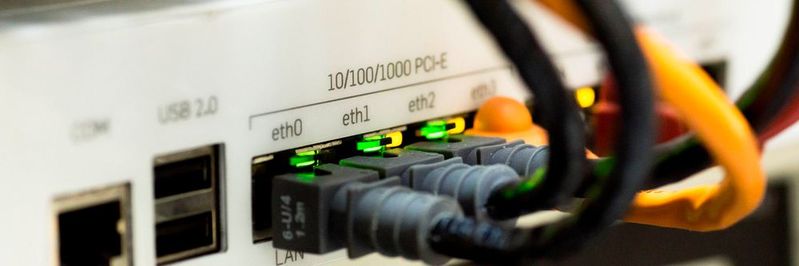
At this point, let’s clarify again what the future program Industry 4.0 is about and what it means with regard to challenges and opportunities. If we talk about Industry 4.0, the optimisation of production and distribution processes with respect to more flexibility and efficiency is meant. That does not sound new, but digitisation now plays the essential role for the fourth industrial revolution. A variety of technologies are used, from semiconductor products like sensors and microcontrollers, to things like autonomous robots and simulators, big data and analytics, and, of course, cloud computing. Design documentation, engineering drawings and descriptions for production processes need to be available during every step of the production. Manufacturing processes will be documented at every stage. Consequently it is necessary that data will be stored. Here cloud computing often comes into play.
Alternative Technologies Enable Industry 4.0
There are certainly many advantages that speak for could computing but also certain well-known reservations, such as data protection. For quite some other reasons other technologies could also be an alternative, such as near field communication (NFC). This wireless proximity technology is used already in many areas. Many of us have most likely been confronted already with mobile payment, next-generation ticketing schemes or car sharing services that use NFC. But also in industrial settings it can be used to store and process data and information about manufacturing processes. In the following, we will explain how that works.
Melden Sie sich an oder registrieren Sie sich und lesen Sie weiter
Um diesen Artikel vollständig lesen zu können, müssen Sie registriert sein. Die kostenlose Registrierung bietet Ihnen Zugang zu exklusiven Fachinformationen.
Sie haben bereits ein Konto? Hier einloggen
:quality(80)/p7i.vogel.de/wcms/22/80/2280c9b1b0447e4183074e5832b7e424/0122962138v2.jpeg "Um die Ausbeute zu steigern, die Materialbewegungen zu dokumentieren und durch vorausschauende Wartung die Verfügbarkeit der Bergbaumaschinen sicherzustellen, entschloss sich Liebherr, von Microsys eine entsprechende Connectivity Box entwickeln zu lassen. (Bild: Liebherr-Mining Equipment Colmar SAS)")
:quality(80)/p7i.vogel.de/wcms/60/a6/60a66a31295003b8f42ef83d787ae89d/0124018444v2.jpeg "Die Idee des DPP: Jeder Hersteller, der Produkte in der EU verkauft, soll alle Daten aus der Lieferkette sammeln und zugänglich machen. (Bild: Media Srock - stock.adobe.com / KI-generiert)")